
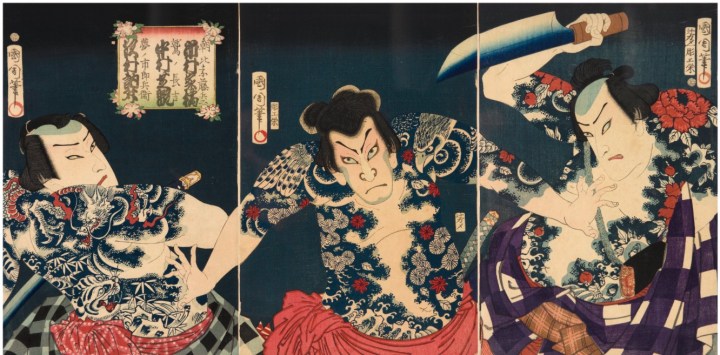
 Japan has had a very long and extensive history with tattooing. The art of irezumi has been has been used by all classes of society, at certain points in time, it was commonplace for everyone to be tattooed, it has been used to mark criminals and has been outlawed all together. The earliest evidence of tattooing has been found in tombs which date back to 5000bc. Clay figures had been unearthed in these tombs with the faces either painted or engraved to represent tattoos. 297ad was the first recorded accounts of tattooing in Japan by the Chinese. In their historical accounts it was written that all men both young and old, had their faces and bodies decorated with tattoo designs. The first record of penal tattoos of Japan was in 720ad when the emperor had decided to take pity on a man who had committed the crime of plotting to rebel and overthrow the state, which was punishable by death, instead having him tattooed with his crime for all to see. By the early 17th century tattooing was a widely accepted form of punishment. The markings denoted many of the crimes. By the latter part of the century penal tattooing had been replaced with other forms of punishment due to the fact that more elaborate and decorative tattooing had gained in popularity, many of the tattooed criminals having their markings covered with new designs. In the 18th century tattooing continued to flourish among firefighters and labourers. They would get tattooed with the idea of it giving them strength, courage or as a symbol of protection. Firefighters for example would sometimes have their bodies tattooed with a dragon for the strength and water for protection against the flames.
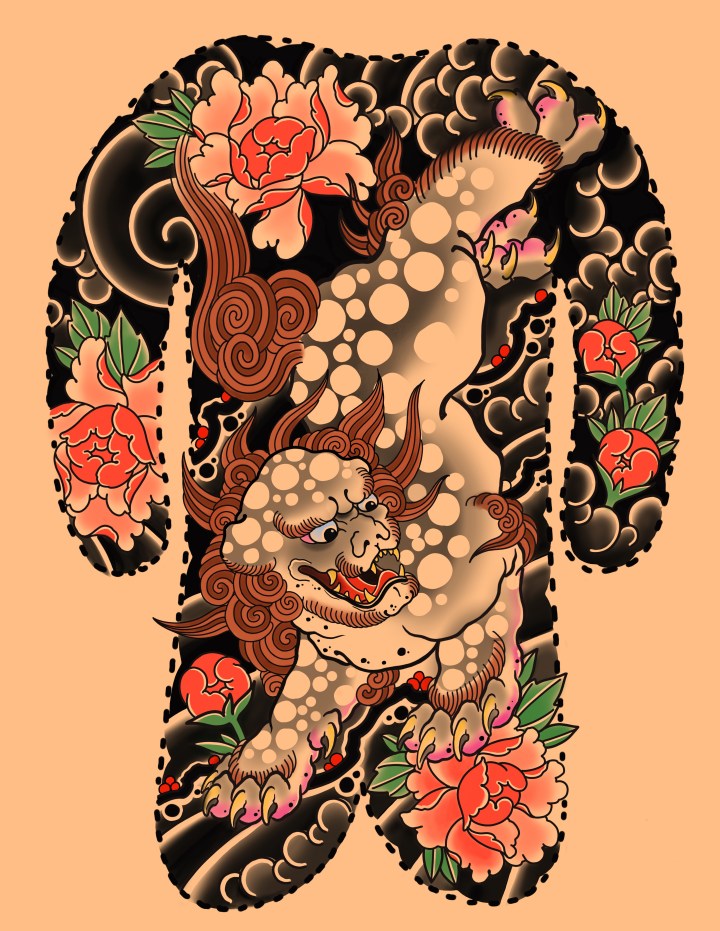
The japanese tattoo is steeped in meaning and tradition. They are meant to tell a story. There are many rules to observe when designing a Japanese tattoo. In contrast with western styles of tattooing, the Japanese tattoo is to continue harmoniously throughout the entire body. Each piece relating back to the other and recounting the tale of the epicentre of the bodysuit, the backpiece! The back is where the whole process of the Japanese bodysuit is to begin. It is the focal point of the suit. The arms, legs, chest and side panels are dictated by what has been placed on the back. The rest of the body is just a continuation of the story. 




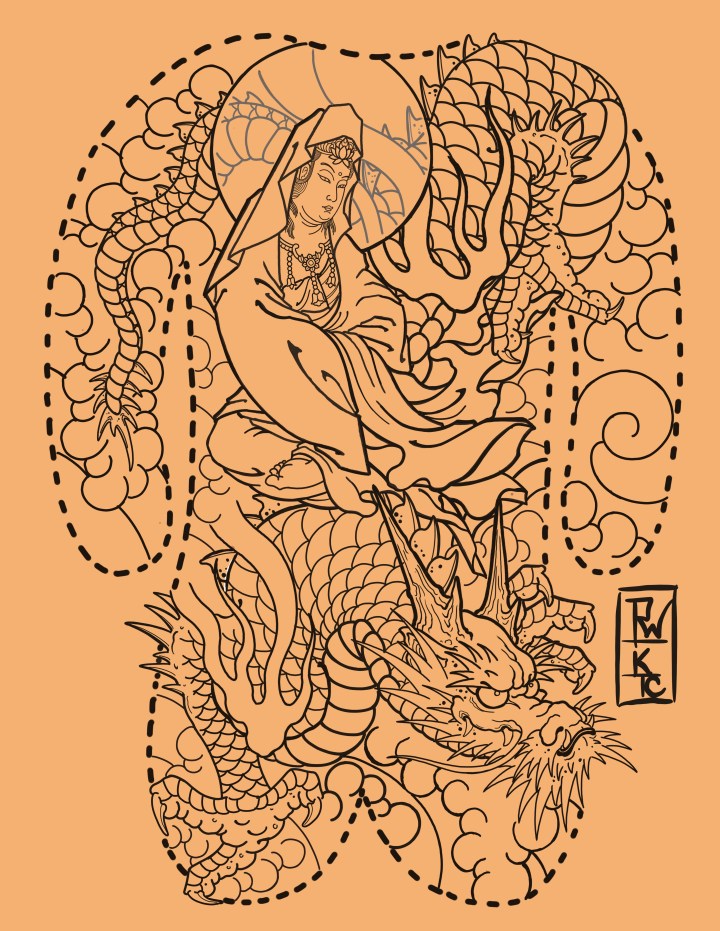


 Karyobinga are celestial beings who play music, dance and fly through the air, a fantastical, immortal creature in Buddhism and are sometimes associated with Amida Nyorai. They are said to recite buddhist scripture with their beautiful melodic voice. They live in the buddhist paradise (gokuraku-jodo). It’s voice is a descriptor of the buddhas teachings.
 The bodysuit project